banner

Industry Solutions

Public Sector: Open Source Intelligence for National Security Missions

OSINT Data and Technology That Strengthens Targeting, Enforcement, and Supply Chain Security Missions

Kharon provides verified, expert-led open-source intelligence that supports government agencies across sanctions targeting, enforcement investigations, export and import control, and defense supply chain risk management. Our platform goes beyond fragmented public records and generic commercial databases — aligning expertise to the regulatory red flags and behavioral indicators that enforcement agencies use, mapping beneficial ownership and control networks, surfacing entities that are controlled by sanctioned or restricted parties or connected to military end-use or forced labor supply chains, and delivering continuously updated intelligence on those entities, their networks, and their related parties. Agencies in 20+ countries rely on Kharon to complement classified holdings, strengthen enforcement actions, and make faster, more defensible decisions across their most demanding national security missions.
How it works

Proven at Scale

U.S. Treasury

Trusted by

DHS and CBP

Used operationally by

20+ countries

Leveraged by government partners in

35+

Fortune 100 companies

The Problem

Fragmented Intelligence in a World of Connected Threats

Government agencies are expected to see around corners — identifying sanctions evasion networks before they mature, detecting export control violations before restricted technology reaches adversaries, and tracing supply chains back to forced labor or foreign threats. The open-source intelligence infrastructure most agencies call on was not built for this level of visibility.

Network

01

Opaque Networks, Limited Visibility

Adversary networks operate through layered corporate structures, shell companies, front organizations, and nominee shareholders specifically designed to evade detection. Identifying who actually controls an entity — and whether that entity is connected to a sanctioned, restricted, or otherwise high-risk party — can require the kind of deep, cross-jurisdictional ownership analysis that fragmented open-source databases were never designed to support.

Fragmented Data

02

Fragmented Data Across Mission Areas

Sanctions targeting, export control enforcement, UFLPA implementation, and defense supply chain risk management often rely on separate open source data sources, tools, and analytic frameworks — even when overlapping adversary networks operate across all of them. A shell company facilitating sanctions evasion may simultaneously be involved in export control circumvention, and defense procurement fraud. Fragmented intelligence means fragmented detection.

Speed of Adversary Adaptation

03

Speed of Adversary Adaptation

Sanctioned and restricted parties can restructure ownership, create new front organizations, and shift procurement routes faster than most commercial databases can track. Agencies need intelligence that leverages all sources of open source information and evolves at the speed of the threat — continuously updated, expert-verified, and structured for immediate operational use.

The Kharon Approach

Verified Open-Source Intelligence for National Security Missions

Kharon provides threat intelligence — underpinned by network analysis and continuous monitoring — that helps government agencies identify, investigate, and act on sanctions evasion, export control violations, forced labor exposure, and adversary supply chain activity with a level of depth and precision that fragmented commercial databases cannot match. Where many commercial risk and OSINT platforms rely on corporate registration records, trade shipment data, and automated media scanning to generate risk signals, Kharon produces proprietary threat intelligence through primary-source investigation — aligning expertise to the regulatory red flags and behavioral indicators that enforcement agencies themselves use — identifying entities controlled by sanctioned or restricted parties, connected to military end-use, or linked to forced labor supply chains, even when those entities do not appear on any government list.

All intelligence in the Kharon Core is led and verified by subject matter experts with backgrounds in intelligence, open-source investigations, and financial regulation. Ownership and control relationships are sourced, documented, and traceable — giving government organizations the kind of defensible, auditable open-source intelligence that strengthens targeting packages, enforcement cases, and supply chain risk assessments.


Network Intelligence

Network Intelligence

Continuous mapping of beneficial owners, shell companies, front organizations, and procurement networks where sanctions evasion, export control circumvention, and adversary supply chain activity can put national security at risk.

Expert Research

Expert Research, Verified Data

Expert-led investigations and data sourcing create verified entity intelligence. Aliases are validated against source documents. Control relationships are sourced, documented, and traceable — providing the evidentiary quality that government missions demand.

Unified Platform

Open-Source Intelligence Tools & Unified Platform

ClearView, GraphCast, CoreStream, and API as a connected ecosystem — from detection, to deep investigation, to operational screening, to automation at scale — designed for the most demanding government workflows, including multi-agency task force operations and interagency coordination.

Government trusted

Mission Proven

Used operationally by the U.S. Department of the Treasury, Department of Homeland Security, Customs and Border Protection, and government agencies across 20+ countries for sanctions targeting, enforcement, trade enforcement, policy analysis, and interagency task force operations — including multi-agency coordination environments where sourced intelligence can be operationalized across agencies.

Mission Workflows

How Government Agencies Work with the Kharon Platform

Sanctions TargetingSanctions Targeting & Designation Development

NETWORK ANALYSIS FOR TARGETING WORKSTREAMS

Kharon provides the most comprehensive and accurate open-source intelligence on global networks tied to sanctioned and restricted entities — mapping the layered ownership structures, shell companies, front organizations, and commercial relationships that are not visible in standard commercial databases. ClearView enables targeting analysts to visualize these networks in full, surfacing the entity relationships and control pathways that inform designation development and evidentiary workstreams. GraphCast delivers focused, targeting-relevant datasets as structured files that integrate directly into existing analytic systems, and CoreStream provides continuous, tailored insights specific to your mission and areas of focus — ensuring targeting analysts maintain situational awareness as adversaries restructure.


Outcome: Targeting analysis augmented by verified, sourced open-source intelligence. High priority entities identified before they appear in any headline.
ComplianceEnforcement & Investigations

VERIFIED INTELLIGENCE FOR CASE BUILDING

When federal law enforcement and investigative agencies need to trace commercial relationships, map associated party networks, or investigate cases around sanctions violations and export control circumvention, ClearView presents enriched entity profiles, risk indicators, and ownership data in a single, powerful investigative tool. GraphCast provides curated data aligned to specific threat typologies — enabling investigative lead development and risk detection across entities of interest. Because all Kharon data is expert verified and fully documented, it can support enforcement actions and case narratives in ways that other commercial data cannot.


Outcome: Complex investigations completed faster, with documentation detailed enough to support enforcement workstreams.
MEUExport Control & Diversion Detection

CIVIL MILITARY FUSION, SENSITIVE TECHNOLOGY TRANSFER & ENFORCEMENT

Kharon's Military End Use dataset identifies thousands of entities that may trigger license requirements under the EAR's military end-use provisions — including entities not identified on any U.S. export control list. The BIS 50% data maps subsidiary and affiliate networks of Entity List parties — identifying the unlisted intermediaries through which restricted technology can reach designated end users. (Note: The BIS Affiliates Rule is currently under a one-year suspension through November 9, 2026; Kharon maintains affiliate network data in anticipation of the rule's resumption.) GraphCast delivers these datasets as files that integrate directly into existing analytic systems.


Outcome: Diversion risk surfaced more quickly and in greater detail. License review grounded in verified entity intelligence, not surface-level name matching.
InvestigationForced Labor Investigations

UFLPA ENFORCEMENT & SUPPLY CHAIN VISIBILITY

Kharon's Forced Labor data identifies companies that exhibit red flag indicators for forced labor risk — including certain labor transfer programs, government-sponsored training programs, and associated indicators — and maps their networks, providing entity-level intelligence on companies connected to forced labor in the Xinjiang Uyghur Autonomous Region and beyond. This is the kind of granular, verified data that supports CBP's enforcement of the Uyghur Forced Labor Prevention Act. GraphCast enables supply chain relationship visibility to trace connections between importers and upstream entities operating in high-risk regions, including the identification of transshipment routes and diversion tactics. As UFLPA enforcement expands — and as forced labor enforcement grows internationally, including the EU Forced Labour Regulation taking full effect in December 2027 — agencies need intelligence that keeps pace with supply chain restructuring and evasion. CoreStream delivers continuous intelligence on affected entities and networks as the landscape shifts.


Outcome: UFLPA investigations enhanced by entity-level forced labor open source intelligence. Supply chain connections illuminated from importer to upstream source, with transshipment and diversion pathways identified.
Supply chainSupply Chain Risk Management (SCRM)

DEFENSE INDUSTRIAL BASE SECURITY & CONTRACTOR VETTING

Kharon datasets for FOCI assessment help SCRM professionals identify entities within the defense industrial base that may be subject to foreign ownership, control, or influence — covering majority and minority ownership, control relationships, investor relationships, state-owned enterprise connections, joint ventures with foreign countries of concern, and front or shell company structure. ClearView enables deep due diligence on contractors, subcontractors, and supply chain partners — supporting Section 1260H compliance, FOCI identification, CFIUS transaction review, and ongoing supply chain risk assessment across the defense industrial base. For Section 889 covered telecommunications equipment and services compliance, Kharon provides ownership and supply chain intelligence to help identify which vendors and their networks may be subject to restrictions. With the Section 1260H direct prohibition on new DoD contracts with listed Chinese Military Companies taking effect June 30, 2026, Kharon's ownership and control intelligence helps contractors identify exposure before it becomes a compliance failure.


Outcome: Sub-tier supply chain risk identified before it becomes a security incident. Contractor vetting grounded in verified foreign ownership and control intelligence.
Drug traffickingCountering Illicit Networks

DRUG TRAFFICKING ORGANIZATIONS, FENTANYL PRECURSOR SUPPLY CHAINS & TRANSNATIONAL CRIMINAL ORGANIZATIONS

Kharon's network intelligence capabilities support agencies working to disrupt drug trafficking organizations, fentanyl precursor supply chains, and transnational criminal networks. ClearView enables analysts to map the corporate structures, financial intermediaries, and front companies that DTO and TCO networks use to move money, procure precursor chemicals, and launder proceeds. Kharon's DTO intelligence identifies entities connected to individuals and organizations sanctioned under narcotics-related designations and their business networks, while CoreStream provides continuous intelligence on evolving network structures as enforcement pressure forces these organizations to adapt. Kharon's open-source intelligence complements classified and law enforcement holdings — enabling agencies to build sourced, shareable assessments that support inter-agency coordination and government partnerships.


Outcome: Illicit network structures mapped and documented with sourced, shareable intelligence. Financial intermediaries and front companies identified to support disruption operations.

The Kharon Platform

Built for the Most Demanding Government Missions

Each tool is optimized for seamless integration within your workflow: from detection, to deep investigation, to operational screening, to automation at scale. Together, our technology allows teams to move fluidly from signal to understanding to action — whether supporting a single analyst's investigation or powering a multi-agency task force. All Kharon data is structured and readable by AI and LLM-powered systems to ground results in a reliable source of truth.

Kharon clearview

ClearView

SearchInvestigate

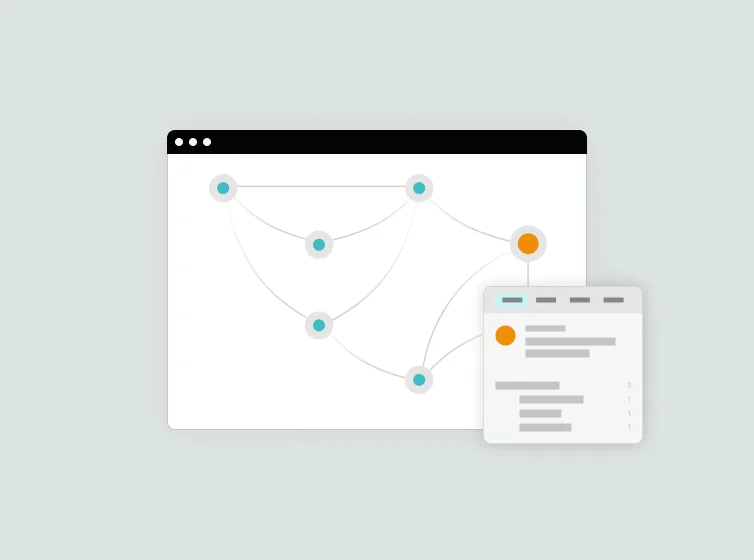
Kharon ClearView is a powerful tool for analyzing and visualizing complex entity relationships and associated threats at global scale, supporting the most demanding due diligence, targeting, and investigative workflows.

Kharon graphcast

GraphCast

ScreenAlert

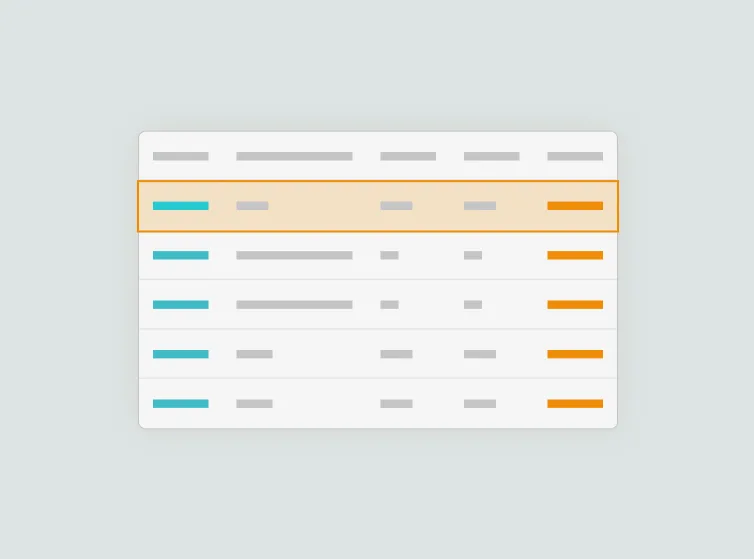
Kharon GraphCast provides curated, continuously maintained datasets aligned to specific threat typologies, including sanctions ownership and control, FOCI risk, military end-use entities, DTO and forced labor indicators, designed to power complex analytic systems across investigation, enforcement, and supply chain security missions.

Kharon api

API

IntegrateScale

Our API enables custom applications and workflows built directly on Kharon insights and risk scores, integrating seamlessly into internal systems to power analysis, automation, and decision-making at scale.

Kharon corestream

CoreStream

DiscoverPrioritize

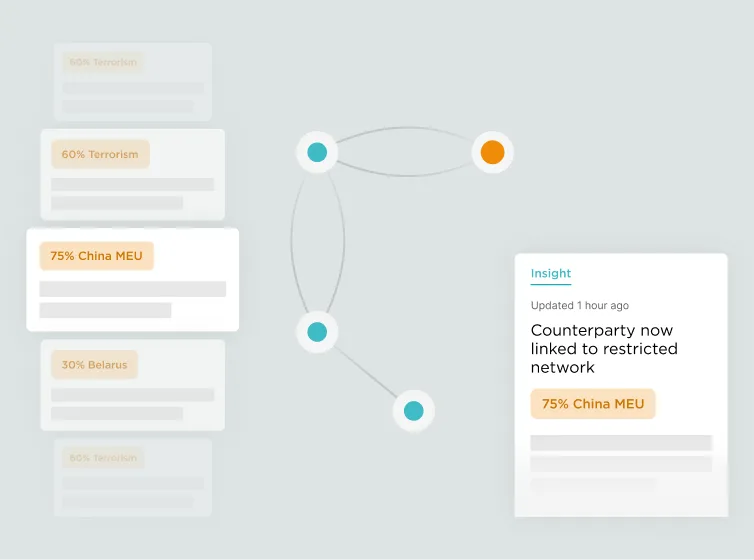
Kharon CoreStream surfaces entity-level and network-level intelligence triggered by proprietary research, regulatory developments and enforcement activity, providing continuous situational awareness on evolving threat networks across government missions.

Solutions by Role

Trusted Intelligence for Every Level of Your Mission

Research Analysts

Intelligence Analysts

Kharon extends your open-source intelligence capabilities with verified, expert-sourced entity data, ownership and control networks, and related party relationships that complement classified holdings. When targeting workstreams require sourced, defensible evidence of network connections, Kharon delivers intelligence that meets evidentiary standards.

Enforcement Analysis

Enforcement Analysis & Export Enforcement

ClearView enables deep investigative analysis on entities of interest — instantly visualizing ownership, control, and commercial networks, surfacing military end-use connections, and supporting license review and diversion risk assessment. GraphCast delivers MEU, Entity List, and affiliate network data as structured files that integrate directly into analytics systems.

Investigation

UFLPA Enforcement & Trade Investigations

Kharon's Forced Labor data provides the entity-level intelligence CBP needs to enforce UFLPA effectively — tracing connections between importers and upstream entities in high-risk regions and identifying diversion tactics such as transshipment through intermediary countries.

Deal decisions

SCRM & Acquisition Professionals

Kharon's datasets for FOCI assessment help acquisition professionals identify adversarial capital, exposure to state-owned enterprises, and military-civil fusion connections in contractor supply chains — directly supporting Section 1260H compliance and CFIUS reviews. ClearView supports the deep due diligence that FOCI identification, defense industrial base risk assessments, and broader supply chain security requirements demand.

Task Force Interagency Operations

Task Force & Interagency Operations

Kharon is built for the collaborative nature of modern government operations — from multi-agency task forces to interagency coordination environments. Because all Kharon intelligence is open-source and fully documented, it can be operationalized across government functions, with allied governments, and with the private sector in unclassified settings. ClearView and CoreStream give task force members a common operating picture built on verified entity intelligence — enabling the information sharing that multi-agency missions require.

Counter Narcotics Illicit Finance Analysts

Counter-Narcotics & Illicit Finance Analysts

ClearView maps the corporate structures, financial intermediaries, and front companies that drug trafficking organizations and transnational criminal networks use to move money, facilitate operations and procure precursor chemicals. Kharon's open-source intelligence provides critical insights that complement classified and law enforcement holdings for operational leads and complete situational awareness.

Policy Legislative Staff

Policy & Legislative Staff

CoreStream provides continuous, curated intelligence on sanctions enforcement trends, evasion typologies, and adversary economic activity — the kind of current, structured insight that supports policy development, legislative oversight, and strategic analysis.

FAQ

Common Questions

From government professionals evaluating open-source intelligence solutions.

Many commercial risk and OSINT platforms rely on unsophisticated algorithmic scraping of corporate registration records, trade shipment data, and automated media scanning to generate searchable databases. These offerings miss important pieces of the open source intelligence puzzle because they are limited in the sources they use, and the output drowns out signals with noise. Kharon goes further: our subject matter experts conduct original investigations that identify and leverage open source information regardless of where it exists. Simply put, we are not limited to corporate records or trade data or basic media reviews. Our remit is anywhere relevant information exists. And because we are focused on publishing relevant open source intelligence — rather than connecting bulk records — our platform focuses on exactly what you need, whether that means identifying entities that are tied to sanctioned or restricted parties, connected to military end-use, or linked to forced labor supply chains. Kharon's expertise-driven methodology aligns to the red flags — including threat indicators, evasion typologies, and network patterns — that enforcement agencies themselves use to identify risk. This investigative depth, combined with sourced and documented analysis, produces intelligence that is qualitatively different from what aggregation-based providers can deliver. All Kharon data is easily readable by AI and LLM-powered systems to ground results in a reliable source of truth.

Open-source intelligence refers to intelligence derived from publicly and commercially available information. Government agencies use OSINT to complement classified holdings, build targeting packages, support enforcement investigations, and maintain situational awareness on threat networks. Kharon provides structured, verified, expert-led OSINT focused specifically on sanctioned and trade-restricted entities, their ownership and control networks, and related parties. Unlike raw OSINT feeds that require significant analyst processing, Kharon delivers curated, sourced, and continuously updated entity intelligence designed for immediate operational use.

Yes. GraphCast delivers curated data files in standard formats designed to integrate directly into existing analytic and investigative systems — no rip-and-replace required. The Kharon API enables custom integrations for agencies building proprietary workflows or embedding Kharon intelligence into internal or 3rd party platforms. ClearView provides a powerful web-based investigative tool that teams can use alongside existing systems.

The OFAC 50 Percent Rule treats entities as blocked when they are owned, directly or indirectly, 50 percent or more in the aggregate by one or more blocked persons — even if the entity itself does not appear on the SDN List. For sanctions targeting and enforcement, this means a significant universe of entities are effectively sanctioned but invisible to traditional watchlist-based approaches. Kharon's 50-Plus dataset identifies these entities through deep ownership analysis across opaque jurisdictions and layered corporate structures, providing the kind of verified intelligence that supports designation development and enforcement actions.

Kharon's Forced Labor dataset provides entity-level intelligence on companies that may be connected to forced labor in the Xinjiang Uyghur Autonomous Region and globally. This data supports CBP's enforcement of the Uyghur Forced Labor Prevention Act by enabling supply chain relationship visibility from importers to upstream entities in high-risk regions, including the identification of transshipment routes and diversion tactics. The UFLPA Entity List — maintained by the interagency Forced Labor Enforcement Task Force (FLETF) — identifies entities whose goods are subject to the rebuttable presumption, distinct from the SDN List or BIS Entity List. Kharon's data goes beyond generic supply chain mapping — it identifies specific entities with documented forced labor risk indicators, giving enforcement agencies the entity-level intelligence needed to evaluate supply chain claims and prioritize enforcement resources.

Kharon helps SCRM professionals identify adversarial capital, foreign ownership, control, or influence (FOCI), and military-civil fusion connections in defense contractor supply chains. Kharon datasets for FOCI assessment map adversarial capital, state-owned enterprise connections, and investor relationships that often fall outside formal corporate records, while the MEU dataset identifies entities with military connections in countries of concern. Together, these solutions support Section 1260H requirements, FOCI identification, CFIUS transaction review, and ongoing risk assessment across multi-tier supply chains where traditional corporate data provides limited visibility. With the Section 1260H direct prohibition on new DoD contracts with listed Chinese Military Companies effective June 30, 2026, and an indirect prohibition on contracting with entities that use end products from listed entities or their controlled subsidiaries following in June 2027, Kharon's ownership and control intelligence is increasingly critical for defense acquisition professionals.

Section 1260H of the FY2021 NDAA requires the Department of Defense to identify Chinese Military Companies — entities that operate or have operated in the defense and related materiel sector, or that are owned or controlled by, or affiliated with, the People's Liberation Army or other Chinese military organizations. Effective June 30, 2026, DoD is prohibited from entering into new contracts with listed entities or entities under their control, with an indirect prohibition on sub-tier supply chain connections following in June 2027. Kharon's FOCI and ownership intelligence covers the networks of 1260H-listed entities, identifying unlisted subsidiaries, controlled entities, and foreign ownership relationships that create exposure across the defense industrial base — exposure that standard corporate registration data does not reveal.

Kharon's coverage is global, with particular depth in the jurisdictions and networks most relevant to government missions: Russia and its global evasion networks, China's military-civil fusion ecosystem, Iran, North Korea, Venezuela, and other countries subject to comprehensive or targeted sanctions programs. Coverage extends across jurisdictions where sanctioned and restricted parties are known to operate, restructure, and establish intermediary entities.

No. Kharon does not monitor or log specific search queries. Your investigative activity is not monitored or logged by Kharon.

Kharon operates exclusively in the open-source domain. All intelligence is derived from publicly and commercially available sources, meaning it can be shared across agencies, with allied governments, and in unclassified settings without compromising sources and methods. For agencies that maintain classified holdings, Kharon provides a verified open-source baseline that complements and corroborates classified intelligence — enabling analysts to build sourced, shareable assessments while protecting classified intelligence.

Kharon's network intelligence capabilities help agencies map the corporate structures, intermediaries, and front companies that drug trafficking organizations and transnational criminal networks use to move money, support commercial operations and procure fentanyl precursor chemicals. ClearView enables analysts to visualize these network structures, while the DTO dataset identifies entities connected to sanctioned narcotics traffickers. Because Kharon's intelligence is open-source and fully documented, it can be shared across agencies and with allied governments to support coordinated disruption operations.

Government agencies are increasingly leveraging AI and machine learning to process large volumes of entity data, detect patterns in commercial activity, and identify potential sanctions evasion networks. Kharon supports this shift by providing structured, machine-readable data designed to power AI-driven analytics. All Kharon data is easily readable by AI and LLM-powered systems to ground results in a reliable source of truth — ensuring that AI-generated insights are anchored in verified, expert-sourced intelligence rather than unstructured or unverified data.

Agencies should evaluate data quality (is it expert-verified or algorithmically generated?), provenance (can every claim be traced to a source document?), coverage depth (does it go beyond commercial registries and trade records?), update frequency (how does it track adversary adaptation?), and integration flexibility (can it feed into existing classified and unclassified systems?). Kharon is designed to meet each of these requirements, with subject matter experts who are steeped in national security threat networks, open-source investigations, and government restriction programs whose expertise leads the investigative work that powers every dataset.

Get Started

See How Kharon Supports Your Mission

Talk to our team about your intelligence requirements, enforcement priorities, and operational workflows — and see how Kharon's data and technology can strengthen what your team has already built.

Public Sector OSINT for National Security Missions | Kharon