banner

Industry Solutions

Semiconductor Export Controls & Trade Compliance

Verified Intelligence on Restricted Parties, Their Affiliates, and End-Use Risk — Across the Semiconductor Value Chain

Kharon helps semiconductor companies strengthen export control and trade compliance programs — from BIS Entity List affiliates and restricted party screening to military end-use and diversion risk — with the world's most comprehensive data on restricted entities, their related parties, and associated risk. Our platform goes beyond standard denied party screening and published government lists: it maps the corporate hierarchies of designated parties, identifies the unlisted affiliates and spun-off subsidiaries that can carry the same restrictions, and surfaces the diversion networks and procurement agents that move controlled technology to prohibited destinations. Kharon research aligns to the export-control red flags enforcement agencies use — diversion patterns, sensitive-technology transfers, and military end-use profiles — to surface high-risk entities proactively and often before they appear on any restricted parties list. Fabless designers, integrated device manufacturers, equipment and materials suppliers, and EDA software firms rely on Kharon to build defensible compliance programs in one of the most heavily controlled — and fastest-moving — regulatory environments in global trade.
How it works

Proven at Scale

9 of 10

Largest global semiconductor companies

4 of 5

Largest global software companies

35+

Fortune 100 companies

The Problem

Why Basic Screening Falls Short for Complex Export Compliance

Semiconductors sit at the center of the world's export-control system, and the controls expand faster than most compliance infrastructure was built to navigate. Regulators and enforcement agencies now expect semiconductor companies to demonstrate coverage well beyond matching customers against published government lists.

Hidden ownership

01

The Affiliates and Spinoff Blind Spot

The BIS Entity List has long been the foundation of export-control screening for semiconductor companies. But the scope of restricted parties extends well beyond the list itself. Affiliates and subsidiaries of designated entities — particularly those owned 50% or more by listed parties — can carry the same export-control risk even when they are not individually named, and designated firms have repeatedly spun up newly named subsidiaries to keep operating. Identifying these connections requires complex investigations into military ties and mapping corporate hierarchies across jurisdictions, not just matching against a published list.

End Use Ambiguity

02

Diversion and Transshipment

A controlled component rarely reaches a prohibited end user directly. It moves through a distributor, a reseller, or a trading company in a third country — and from there to a restricted military end user or a sanctioned party. Detecting this risk requires understanding if your customer has ties to restricted parties, who ultimately controls them, and whether a transaction fits a known diversion pattern — intelligence that no basic list match or end-user certification can provide on its own.

Regulatory Velocity

03

Regulatory Velocity

Entity List additions, advanced computing and semiconductor manufacturing equipment controls, and new country-specific restrictions are arriving at an unprecedented pace. Compliance programs built for a simpler regulatory environment are managing more complexity across more product lines and more jurisdictions. Beyond new regulations, the speed and intensity of enforcement actions are higher than ever. To see how companies are navigating this enforcement landscape, watch our on-demand webinar.

The Kharon Approach

Verified Risk Intelligence for Export Control and Trade Compliance

Kharon provides risk intelligence data — underpinned by network analysis and continuous monitoring — that helps semiconductor companies identify, investigate, and manage actual export-control and trade-compliance risk, not just match names that are already on a government list.

All research in the Kharon Core is led and verified by subject matter experts. Corporate ownership linkages and military ties are sourced, documented, and traceable. Affiliate relationships are mapped across jurisdictions, and end-use risk factors are grounded in investigative methodology aligned to regulatory red-flag indicators — giving compliance teams the defensible, auditable intelligence that regulators and enforcement agencies increasingly demand. For companies that manufacture hardware or source materials, Kharon solutions can also extend to support forced-labor supply-chain compliance under the UFLPA.

Network Intelligence

Focused Network Intelligence

Continuous mapping of corporate hierarchies, military and commercial relationships, and affiliate relationships — where Entity List exposure, military end use, and diversion risk can put your enterprise and your customers at risk.

Research

Expert Research, Verified Data

Expert-led investigations and data sourcing create verified entity and network data — ownership linkages sourced, military and commercial relationships documented, and affiliates identified through expert-guided technology, not blind automation.

Government trusted

Government Trusted

Used operationally by the U.S. Department of the Treasury, Department of Homeland Security, Bureau of Industry and Security, and dozens of other international government partners.

Compliance Workflows

How Semiconductor Companies Work with Kharon

AFFILIATES INTELLIGENCERestricted Party Screening and Affiliates Intelligence

RESTRICTED PARTY & AFFILIATES INTELLIGENCE

GraphCast delivers targeted, continuously maintained datasets that integrate directly into existing trade-compliance platforms — with coverage extending beyond published government lists to include military end users, and affiliates and subsidiaries of designated entities. Higher data accuracy reduces false-positive volume while expanding the scope of restricted parties your screening captures.


Outcome: Screening that reflects the full scope of export control risk, including unlisted affiliates and restricted military actors — fewer false positives, and defensible coverage demonstrated to stakeholders.
ComplianceMilitary End Use and Diversion Risk Assessment

END USE & END-USER DUE DILIGENCE

ClearView presents enriched entity profiles, risk indicators, and corporate ownership data in a single investigative workspace. When a screening hit or a new customer requires deeper assessment — Is there military end-use or end-user risk? Is there diversion risk? Who ultimately owns and controls this party? — ClearView provides the investigative foundation for defensible determinations.


Outcome: End-use determinations completed faster, documented defensibly, and grounded in verified intelligence rather than incomplete public records.
ControlRegulatory Monitoring and Compliance Modernization

Export Control Program Intelligence

CoreStream delivers tailored risk intelligence aligned to your areas of regulatory responsibility — surfacing the entities and networks affected by Entity List, military end-use, and advanced-computing developments as they evolve, complementing your existing regulatory and threat monitoring. Teams receive intelligence organized around the jurisdictions, product lines, and risk typologies that matter to their program.


Outcome: A trade-compliance program that is enabled with more proactive monitoring capabilities.
Supply chainIntelligence Embedded In Any Workflow

INTEGRATION & SCALE

The Kharon API delivers Kharon data and exposure scores directly into existing screening engines, case-management systems, and CRM workflows — so verified risk intelligence reaches the point of decision, whether that is an automated screening gate or a sales team evaluating a customer in a complex jurisdiction.


Outcome: Source-grounded export-control decisions, automated and delivered at scale.

The Kharon Platform

Built for the Most Demanding Compliance Workflows

Each tool is optimized for seamless integration within your workflow: from detection, to deep investigation, to operational screening, to automation at scale. Together, our technology allows teams to move fluidly from signal to understanding to action.

Kharon clearview

ClearView

SearchInvestigate

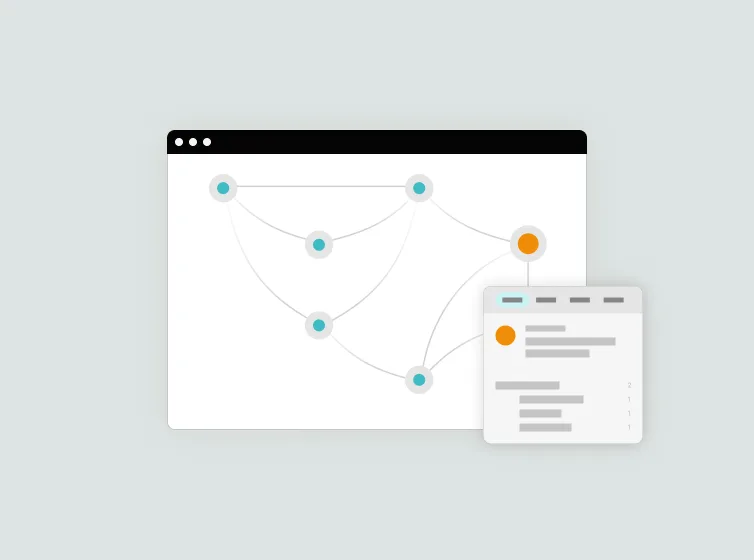
Kharon ClearView enables compliance professionals to investigate and visualize complex entity relationships and associated risk at global scale, producing insights for the most demanding due diligence, export control, and investigative workflows.

Kharon graphcast

GraphCast

ScreenAlert

Kharon GraphCast provides targeted, continuously maintained datasets aligned to specific risk typologies, including BIS Entity List affiliates and military end use, designed to power complex global screening and monitoring systems for export control and trade compliance.

Kharon api

API

IntegrateScale

The Kharon API enables custom applications and workflows built directly on Kharon insights and exposure scores, with native integrations into internal systems to power analysis, automation, and decision-making at scale.

Kharon corestream

CoreStream

DiscoverPrioritize

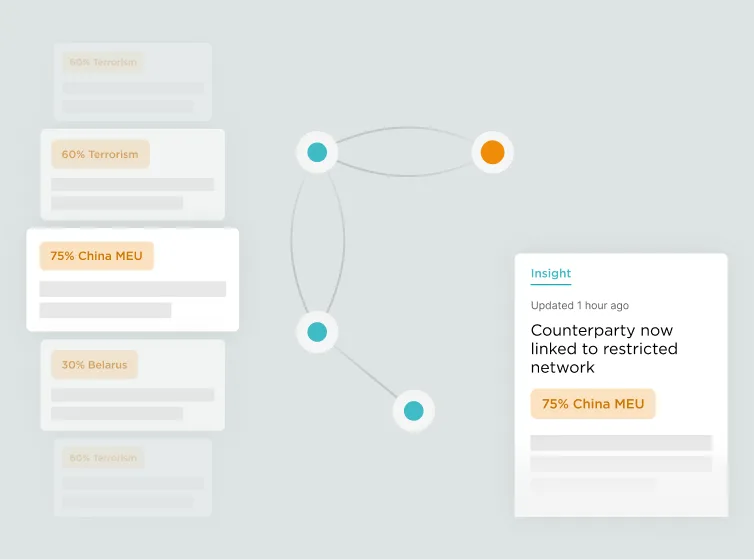
Kharon CoreStream turns fragmented global signals into continuous, personalized streams of insight, delivering the situational awareness compliance teams need to act on emerging risks before they become enforcement actions.

Solutions by Role

Built to Strengthen Export Compliance Outcomes Across Your Organization

Compliance Leadership

Trade Compliance / Export Control Leadership

Kharon extends restricted party coverage beyond published government lists, building defensibility into your export-control program and daily operations. Kharon is a trusted intelligence source relied upon by the U.S. Treasury, BIS, and DHS.

Control

Export Control Operations (ECO)

Expert-verified risk data via GraphCast reduces false-positive volume in your screening platform, and ClearView accelerates end-use investigations and entity assessments. Your team resolves screening hits and license determinations faster, and reclaims capacity consumed by manual research across fragmented sources.

Counsel

Legal / General Counsel

Documented, auditable intelligence supports license-application decisions, voluntary self-disclosure preparation, and exposure assessments. When counsel needs to evaluate a potential violation or the risk profile of a relationship in a complex jurisdiction, Kharon provides the evidentiary foundation.

Deal decisions

Product and Sales / Deal Desk

When a sales team needs to determine whether a prospect in a complex jurisdiction can receive controlled technology, Kharon delivers verified risk intelligence at the point of decision — clearing transactions that pass scrutiny and escalating those that require review, integrated into existing deal workflows.

FAQ

Common Questions

From export-control and trade-compliance professionals evaluating intelligence solutions.

Most trade-compliance data providers aggregate published government lists, organize broadly available trade records, or scrape public corporate registries, addresses, and trade shipment data. That covers the names on a list, but misses the affiliates, corporate relationships, and end-use risk that regulators increasingly expect companies to identify. Kharon takes a different approach: expert-led analysis that identifies the parties involved in restricted activity, maps commercial relationships, sources ownership linkages from primary documents, and verifies entity data with subject matter expertise rather than unguided automation. Kharon's methodology aligns to the red-flag indicators enforcement agencies use — diversion risk, sensitive-technology transfers, and military end use — to proactively surface exposed entities and their networks, often before they appear on any published list. Kharon's intelligence integrates directly into the screening platforms semiconductor companies already use, as the intelligence layer that makes screening decisions more accurate and defensible. Where other providers tell you whether a name appears on a list, Kharon tells you whether an entity is connected to restricted parties, subject to end-use restrictions, or operating within a network that presents export-control risk.

Semiconductor export controls are government restrictions on the export, reexport, and transfer of chips, chip-design software, semiconductor manufacturing equipment, and related technology. In the United States, most are administered by the Bureau of Industry and Security (BIS) under the Export Administration Regulations (EAR), and they focus heavily on advanced computing, AI accelerators, and the equipment used to fabricate advanced-node chips — particularly with respect to China. The controls include Entity List restrictions, the Foreign Direct Product Rule (FDPR), military end-use and end-user rules, and country-specific licensing requirements, and U.S. measures increasingly move in concert with allied controls, notably Dutch and Japanese restrictions on semiconductor manufacturing equipment. Because they change frequently and reach deep into global supply and distribution networks, semiconductor companies need current, verified intelligence on restricted parties and their affiliates to stay compliant.

The BIS Entity List identifies foreign parties — companies, research institutions, and individuals — subject to specific license requirements for the export, reexport, or transfer of specified items. For semiconductor companies, it is one of the most consequential compliance obligations: it restricts the sale of chips, design tools, manufacturing equipment, and related technology to listed parties without a license, and additions arrive frequently. Violations can bring denial orders, substantial civil penalties, and criminal prosecution. Kharon provides expert-verified data on the networks surrounding Entity List parties, including their affiliates, commercial relationships and corporate ownership — going beyond the published list to identify related parties that can carry the same risk.

The BIS Affiliates Rule extends Entity List and Military End-User List restrictions to entities owned 50% or more, in the aggregate, by one or more listed parties — following similar ownership logic as OFAC's longstanding 50 Percent Rule. Unlike OFAC's strict ownership calculation, BIS export-control guidance also treats opaque or unknown ownership as a distinct red flag for diversion. Its implementation was suspended for one year until November 10, 2026, and further extended to January 10, 2027. Even during the suspension, BIS enforcement against diversion, shell structures, and front-company schemes continues, and underlying export-control obligations remain in effect. Kharon maps these affiliate relationships through expert investigation, providing the corporate ownership, commercial intelligence, and military linkages that standard screening tools do not cover.

Restricted party screening — also called denied party screening — is the process of checking customers, distributors, and end users against government restricted-party lists such as the BIS Entity List, the Denied Persons List, and OFAC's SDN List. For semiconductor companies, list-matching alone is no longer sufficient: restricted parties operate through unlisted affiliates, newly created subsidiaries, and third-country intermediaries that never appear on a published list. Effective screening and compliance has to extend to those related parties and to the end use and user behind a transaction. Kharon's data integrates into existing screening platforms and extends their coverage to the affiliates and networks that list-matching misses.

The Foreign Direct Product Rule extends U.S. export-control jurisdiction to items made outside the United States when they are the direct product of specified U.S.-origin technology or software — or are produced by a plant or major component that is itself the direct product of U.S. technology. For semiconductors, the FDPR has expanded significantly, particularly for advanced computing, AI chips, and semiconductor manufacturing equipment. It means non-U.S. fabs, subsidiaries, and partners can face U.S. restrictions on items that trace back to U.S.-origin technology. Compliance requires understanding not just your own technology flows, but the broader network of entities that interact with your products.

The MEU Rule imposes a license requirement for items destined for military end use or military end users in specified destinations; separately, BIS maintains a Military End-User List of named parties. Screening that list alone is not enough — much military end-use risk involves end users that are not individually listed. For semiconductor companies, this risk is especially relevant for dual-use products such as AI accelerators, advanced chips, and design tools. Kharon provides expert-verified military end-use intelligence and entity research that support these determinations, going beyond government list-based screening to assess end-use risk through investigation.

Chip diversion is the rerouting of controlled semiconductors, equipment, or design files to a prohibited end user — often a restricted military program — through intermediaries that obscure the true destination. It typically runs through distributors, resellers, or trading companies in third countries, using front and shell companies and complex transshipment routes. Detecting it requires understanding who a customer's customer is, who ultimately controls the parties in a transaction, and whether the pattern matches known diversion behavior. Kharon maps these networks and the entities behind them, helping compliance teams identify diversion risk that a basic list check cannot reveal.

Export controls reach two parts of the value chain that government list-matching often overlooks: electronic design automation (EDA) software and semiconductor manufacturing equipment. Both can be subject to EAR controls and, in many cases, Entity List and FDPR restrictions when destined for parties of concern. Enforcement has been significant — in July 2025, Cadence Design Systems agreed to pay over $140 million to resolve charges tied to providing chip-design software to a restricted Chinese military university. Kharon helps EDA, equipment, and materials suppliers identify restricted parties, their affiliates, and end-use risk across these controlled product lines.

Export-control violations carry severe consequences. BIS can impose civil penalties of up to $374,474 per violation, or twice the value of the transaction — whichever is greater — along with denial of export privileges; criminal penalties can reach $1 million per violation and up to 20 years' imprisonment. Recent enforcement underscores the exposure for semiconductor companies: in February 2026, Applied Materials and its South Korean subsidiary settled with BIS for $252.5 million — the second-largest penalty in BIS history — and in July 2025 Cadence Design Systems agreed to pay over $140 million in an EDA-related case. For a chip company, a denial order can be an existential business threat. Kharon helps reduce this exposure by providing the verified intelligence that supports defensible compliance decisions.

To a degree, yes. Semiconductor companies that manufacture hardware or source materials and components can face forced-labor supply-chain risk under the Uyghur Forced Labor Prevention Act (UFLPA) and the EU Forced Labour Regulation (phased application from 2027–2028, using an investigation-based model rather than UFLPA's rebuttable presumption), which scrutinize inputs such as polysilicon, certain metals, and electronic assemblies. UFLPA creates a rebuttable presumption that goods produced in whole or in part in the Xinjiang Uyghur Autonomous Region are made with forced labor and barred from U.S. import. This risk usually sits in the sub-tier supply chain, where visibility is hardest. Kharon provides verified intelligence on supply-chain entities and their connections to forced-labor risk, supporting the due diligence that CBP and EU regulators expect.

A deemed export occurs when controlled technology or source code is released to a foreign national inside the United States — treated under the Export Administration Regulations as an export to that person's country of nationality. For semiconductor companies with multinational R&D teams, deemed-export compliance is a routine consideration: a company must determine whether the technology a foreign-national employee, contractor, or visiting researcher can access is controlled, and whether a license is required based on that person's nationality.

Yes. The U.S. Outbound Investment Security Program (OISP), administered by the Treasury Department and effective January 2, 2025, restricts or requires notification of certain U.S. investments into covered foreign persons connected to a country of concern (China, including the Hong Kong and Macau SARs) engaged in defined semiconductor and microelectronics activities (alongside AI and quantum computing). For semiconductor companies and their investors, this adds an investment-side obligation on top of export controls: determining whether a target, partner, or joint venture is engaged in covered activity and connected to a country of concern. Making that determination requires understanding the target's ownership, control, and the nature of its activities. Kharon provides verified intelligence on entities, ownership and control structures, and connections to restricted parties that supports outbound-investment diligence.

Semiconductor companies that are applying AI and automation across export-compliance workflows — automated screening and classification, AI-assisted investigations, and risk scoring – need to ensure that their AI applications have access to verified risk intelligence. Kharon's data is built for this environment — expert-verified and optimized for AI integration to ground results in a reliable source of truth. As teams adopt AI tools, the verifiability of the underlying intelligence becomes the difference between AI that reduces risk and AI that creates false confidence.

Get Started

See How Kharon Fits Your Semiconductor Export-Control Program

Talk to our team about your screening infrastructure, Entity List coverage, and export-control priorities — and see how Kharon's data and technology can strengthen what you've already built.

Get a demo